

Object
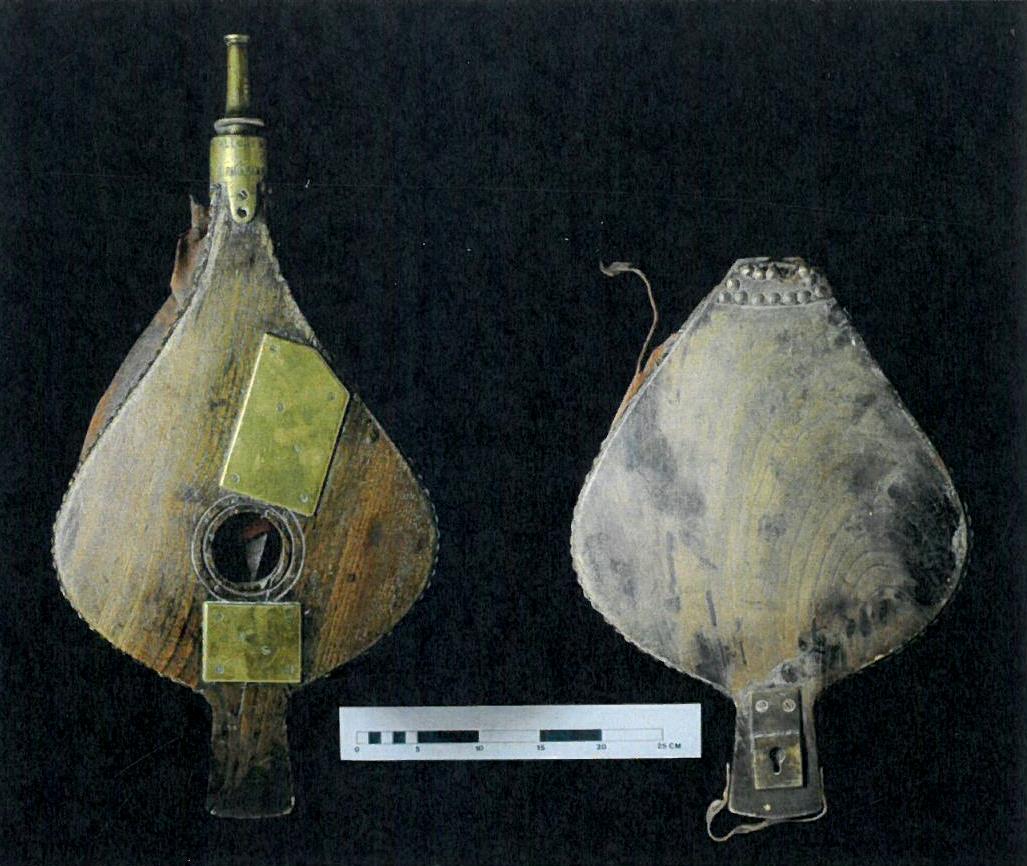
We’ve had a bit of a hiatus from blogging lately as the new students have been settling in and I thought I’d start this year with an object that was conserved by a student a few years ago. The object in question is a set of Victorian bellows from Beamish Museum, which is an open-air museum that preserves examples of everyday life in the North of England. The bellows were brought into the conservation lab as they were so badly damaged that they were unable to be displayed in their current condition; the leather had deteriorated to such an extent that the two halves were no longer being held together.
The bellows from Beamish Museum appear to be hand driven, which are normally composed of a pair of rigid boards with handles joined by flexible leather sides. This all encloses an airtight cavity that can be expanded and contracted by operating the handles. Their is an interior valve which allows air to be drawn into the bellows when the handles are moved apart and allows the air to be expressed when the handles are closed.

Bellows are most notably known for their use with fires to increase the rate of combustion and therefore heat but they have also been known to have been used for use with musical instuments. The Beamish bellows are marked ‘Alldays Birmingham’ and the company, William Allday & Co – founded in 1720 – appeared to have an industrial focus with their products – bellows, portable forges, anvils, vices etc. The company merged with another in 1885 to become ‘Alldays and Onions’ where they appeared to supply a range of items from smithy and foundry equipment to bikes, motorbikes and automobiles. From examining comparative examples it appears that the Beamish bellows were manufactured during the latter part of the 19th century.
Condition
- Dusty and dirty interior and exterior
- Fragile, flaking and missing leather
- Damaged upholstery nails
- Evidence of mould
- Evidence of corrosion
- Signs of previous repair
- Damage to wood
Conservation Treatment
Both the interior and exterior surfaces of the bellows were vacuumed and brushed using soft bristled brushes in order to remove the loose dust and dirt. This treatment proved effective for the interior surface and only partially effected for the exterior. As a result the exterior was also cleaned using cotton wool swabs with a 50:50 acetone/ethanol solution in order to remove more ingrained dust and dirt as well as the mould found on the surface.
There were a number of copper alloy elements to the bellows including upholstery nails, the nozzle, mounting bracket and two possible repair panels. These had all dulled with time and use and there were clear signs of dust and dirt on the surface. Depending on what the bellows were originally used for, these metallic surfaces could have been bright and highly polished and restoring them to this version was considered. Ultimately it was decided that the copper alloy components would be surface cleaned using cotton wool swabs and an appropriate solvent in order to remove the surface dirt and corrosion but they were not polished. It was thought that polishing these components would make the metal look too new, which would then not be in keeping with the rest of the object, which had a ‘used’ look and so they were left with their patina.

The leather of the bellows was highly damaged and fragile as it had undergone deterioration potentially from storage, as such this required immediate attention in order to stabilise and prevent further surface loss. A substance known as Cellugel was applied to both sides of the accessible leather; this depostis a thin film on the leather which provides resistance to atmospheric conditions. Application of this consolidant allowed for further conservation work to be undertaken.
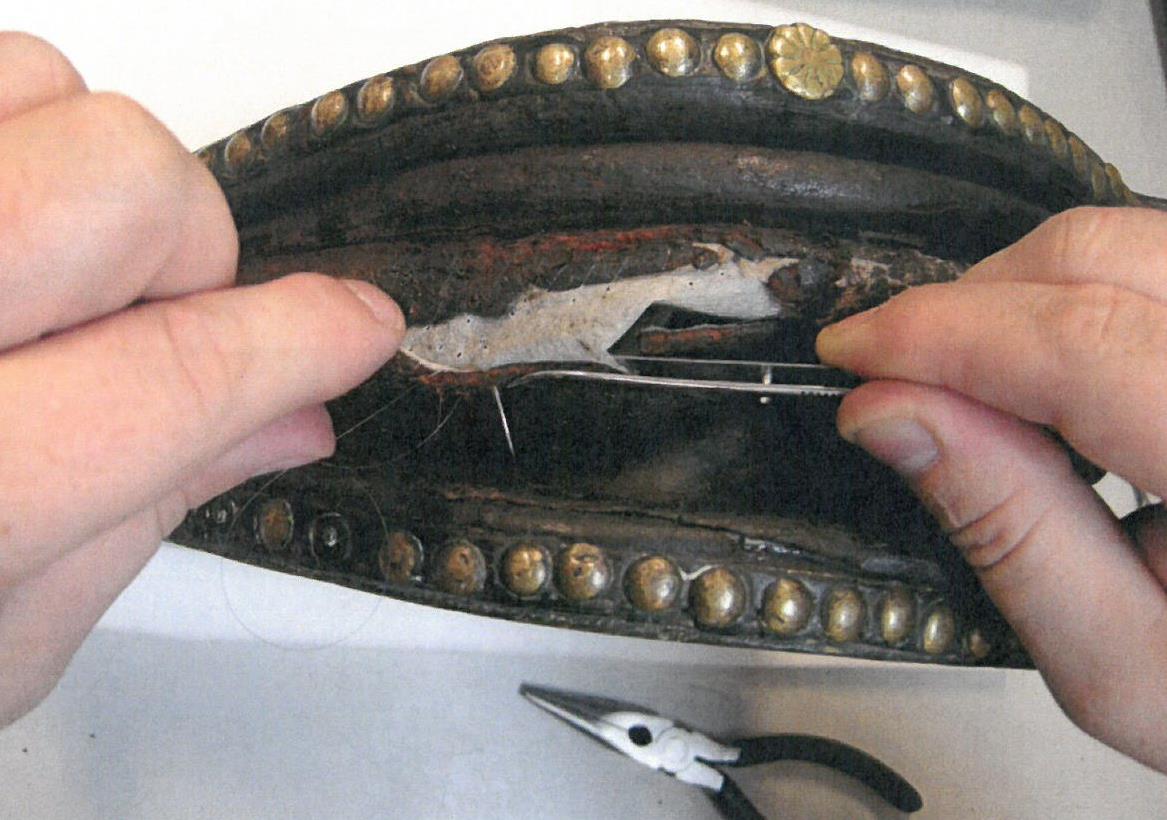
The interior of the bellows revealed a torn hinge flap and this damage was visible when looking at the exterior of the bellows. It was decided that a new piece of similarly coloured leather would be adhered beneath the original in order to restore it’s original appearance while ensuring the original components remained. There were also potential problems with joining the two halves as missing or insubstantial areas of leather made adhesion between the pieces difficult. As such strips of a backing material were adhered to several areas along the edges where added support was required, which then allowed the two halves to be joined.
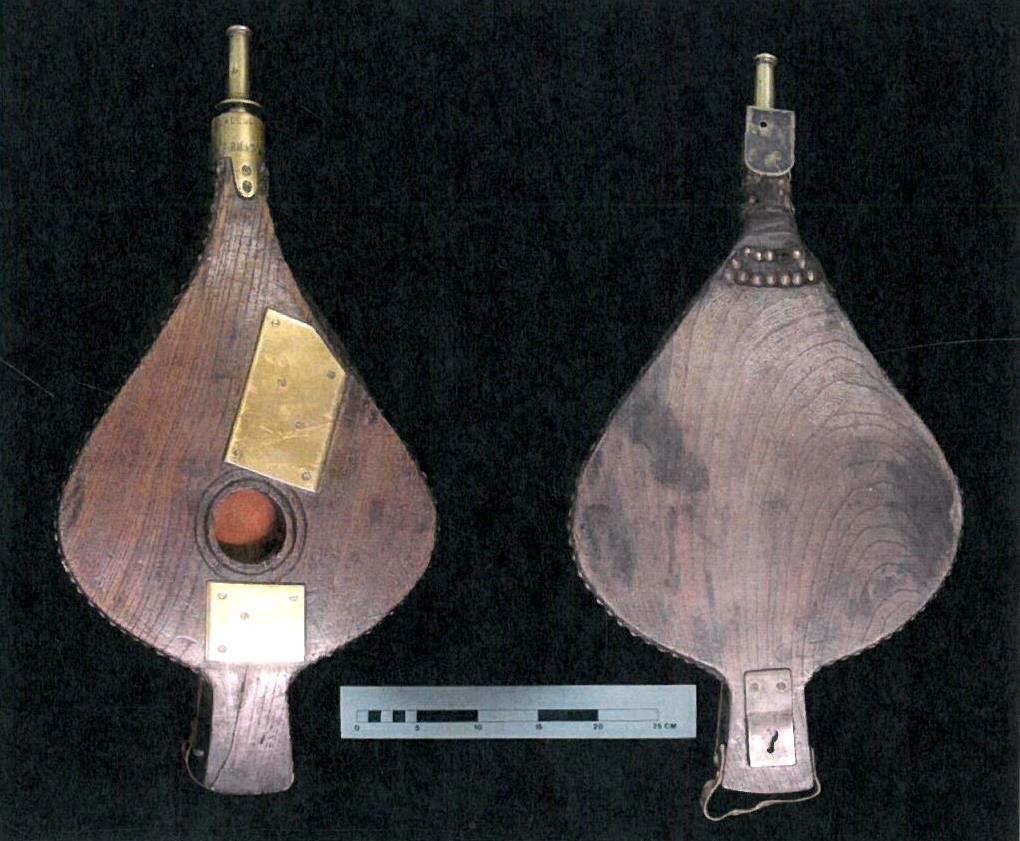
It was clear once the bellows were in one piece that there was still significant damage to the leather. Minor splits and tears were repaired by backing with a suitable, flexible material and a combination of Lascaux 498 and 303 to provide strength and flexibility. Larger areas of missing leather were backed with the same flexible material and then to minimise obtrusiveness, these repairs were colour matched to the original leather. Due to the uneven surface of the leather there were a number of areas where it was clear that a repair had been made and this detracted from the object as a whole. These areas were padded with an appropriate fill, which then minimised the difference in thickness, and they were then colour matched to the original leather.