

Object
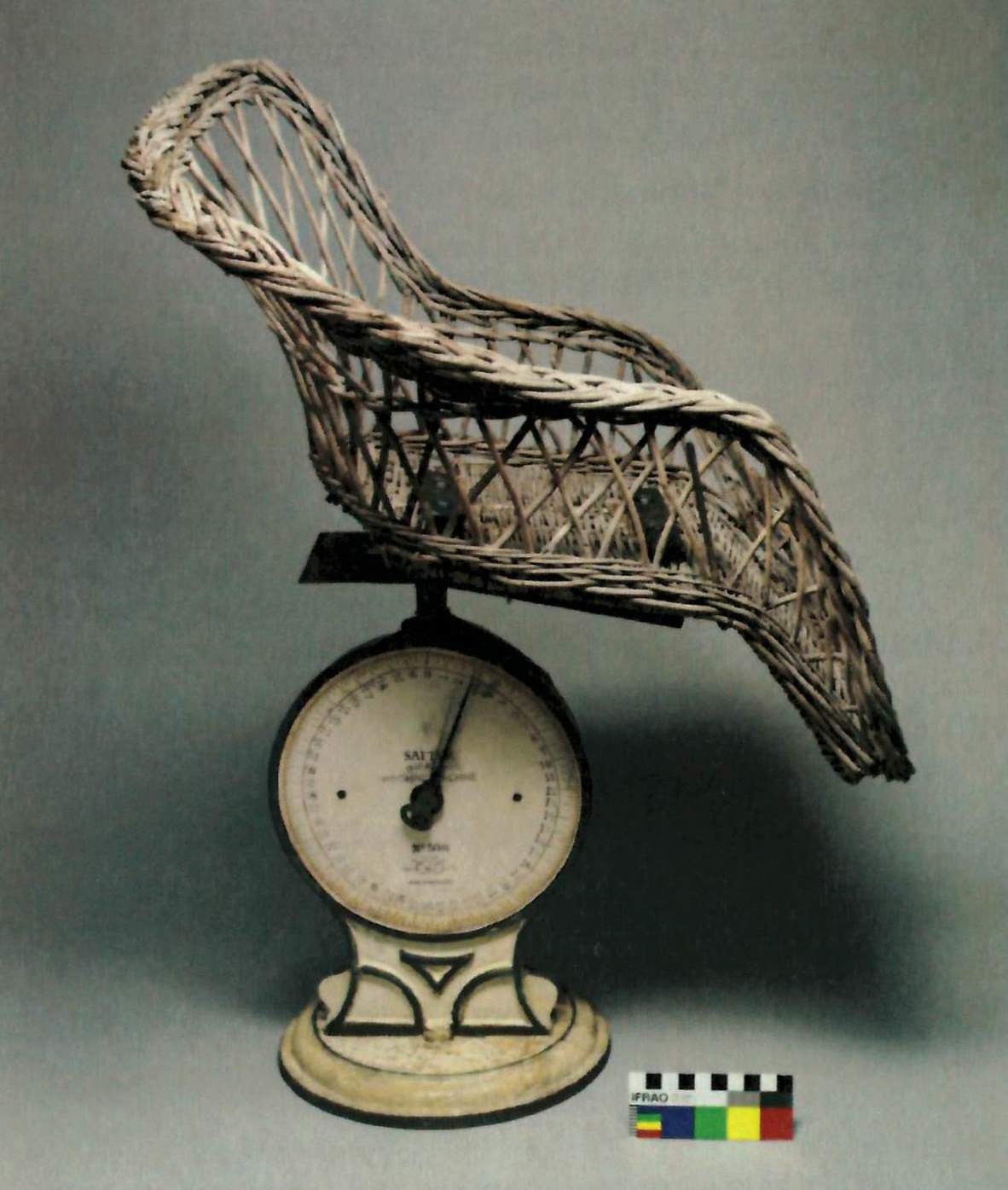
We’re having a flashback to an object that was conserved in 2013. The object is an infant weighing scale made by Salter, which forms part of the collection at Beamish Museum in the north of England. The object consists of a cast iron base, with a dial and face, as well as a woven willow basket, which sits on top of the metal base and would hold the child as it was weighed. The shape of the basket and the weight limit of 50lbs would suggest the scale is used for weighing older children, possibly around 5yrs.
The notion of equating weight with health created a demand for medical scales, which led to the development of paediatrics. These scales were sold as part of a lot at auction with materials from a chemist shop, implying they may have been used to weigh children in order to assess dosage. The pharmacy was once an alternative to visiting the doctor and an assessment would have been part of the overall services provided, however it is also possible that the scales were used in a medical setting of either a doctor’s surgery or hospital.

The significance of weighing children holds both a social and medical function. Relating to the French, ‘Goute de Lait’ movement which weighed children in relation to milk intake and established an age by weight ratio, George Newman knew that by measuring child development it was possible to understand health as a cause and effect relationship to social status and child rearing practices. By 1830 infant mortality in Britain was 150 in every 1,000 live births. The act of weighing children brought specific focus to monitoring children from birth onwards, finding that inadequate feeding practices and unsterile milk was partly responsible for high mortality. Today weighing is still used to assess child health and welfare, alongside regular health visits.
Condition
- Loss of paint
- Evidence of iron corrosion
- Evidence of dirt on the surface
- Surface damage to dial plate
- Corrosion of nickel plating
- Evidence of mould growth on basket
- Evidence of past infestation
- Material loss to the basket
- Basket had deformed slightly in storage
Basket Conservation
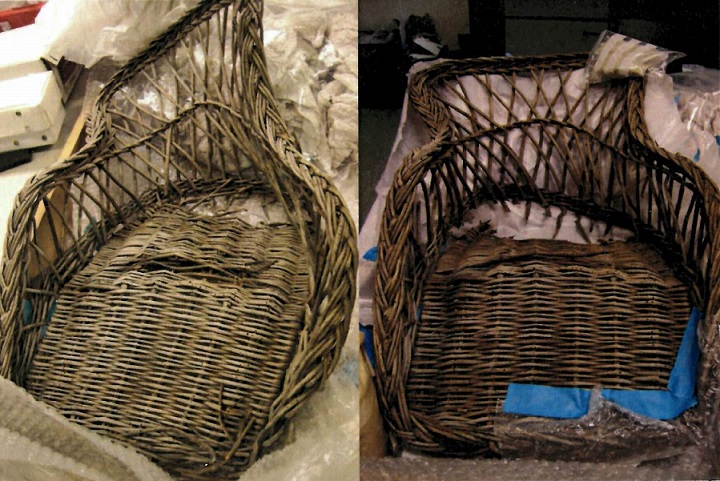
Prior to conservation the object was inspected for live infestation, however due to the darkness of the holes and lack of frass build-up it was suggested that and damage was from a past infestation. It’s also possible for working objects to contain dirt related to use, however on further investigation it was deemed that all dirt present on the object was from storage and therefore it would be appropriate to remove it.
The basket was initially cleaned using a vacuum and small brush in order to safely remove the loose dirt without allowing it to fall through the gaps in the basket weave. Following this, a combination of smokesponge and a dampened cotton swab were used to remove the more ingrained dirt from the surface. Once the surface dirt had been removed the mould required treatment in order to allow for safe humidification and reshaping. In order to ‘neutralise’ the mould spores and prevent further outbreak the basket was placed in a solvent rich atmosphere of approximately 70:30 ethanol/water as ethanol has been known to successfully neutralise mould spores in the past.
Re-shaping of the basket was considered in order to re-insert dislocated elements to improve structural security and to allow for the integration of new material in order to further improve strength and structure. Although a humidity chamber was considered for reshaping the object, it was decided that the use of sympatex would allow for better control regarding reshaping and was also more practical in the lab environment. The sequence of humidification and reshaping is detailed below:
- Sympatex was wrapped round the object and held in place using masking tape
- Wet blotting paper was applied to the sympatex surface with clingfilm as a moisture barrier
- The basket was sealed in a polythene tent to minimise the escape of water vapour
- After 4 hours of humidification the basket was pliable and able to be reshaped using gentle manipulation and weights
- The object was allowed to dry with weights in place
- The process was repeated to allow for the re-insertion of material to the base.
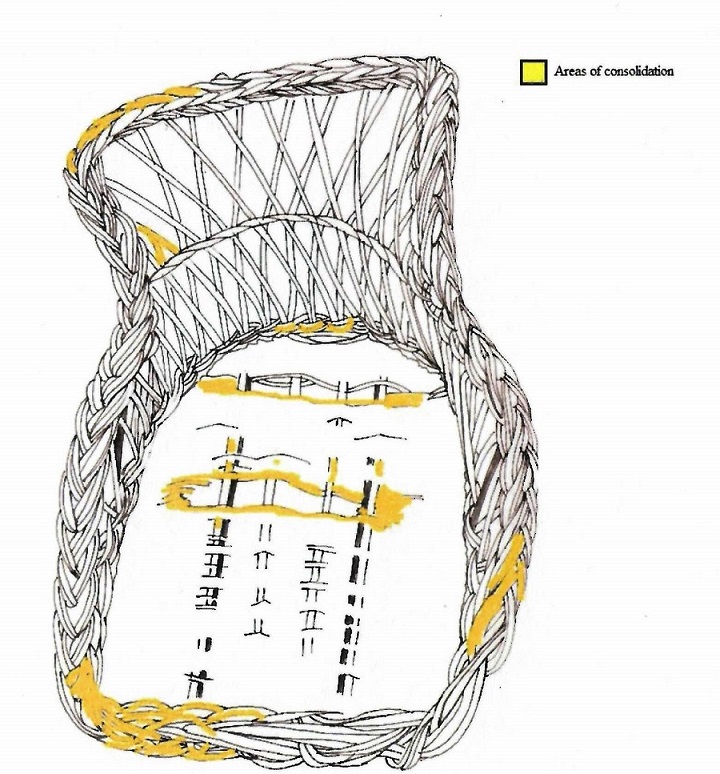
The basket was consolidated following reshaping to maintain the natural flexibility of the willow and to help the re-shaped basket support its own weight. It was realised that due to the condition of the willow, any consolidation taking place would be essentially irreversible without great intervention but was deemed necessary in order to impart strength. Various consolidants were tested depending on their natural strength and flexibility and two methods of application were tested; injection and coating. On completion of testing Paraloid B72 was chosen due to its known longevity and the flexible consolidation which it imparted.
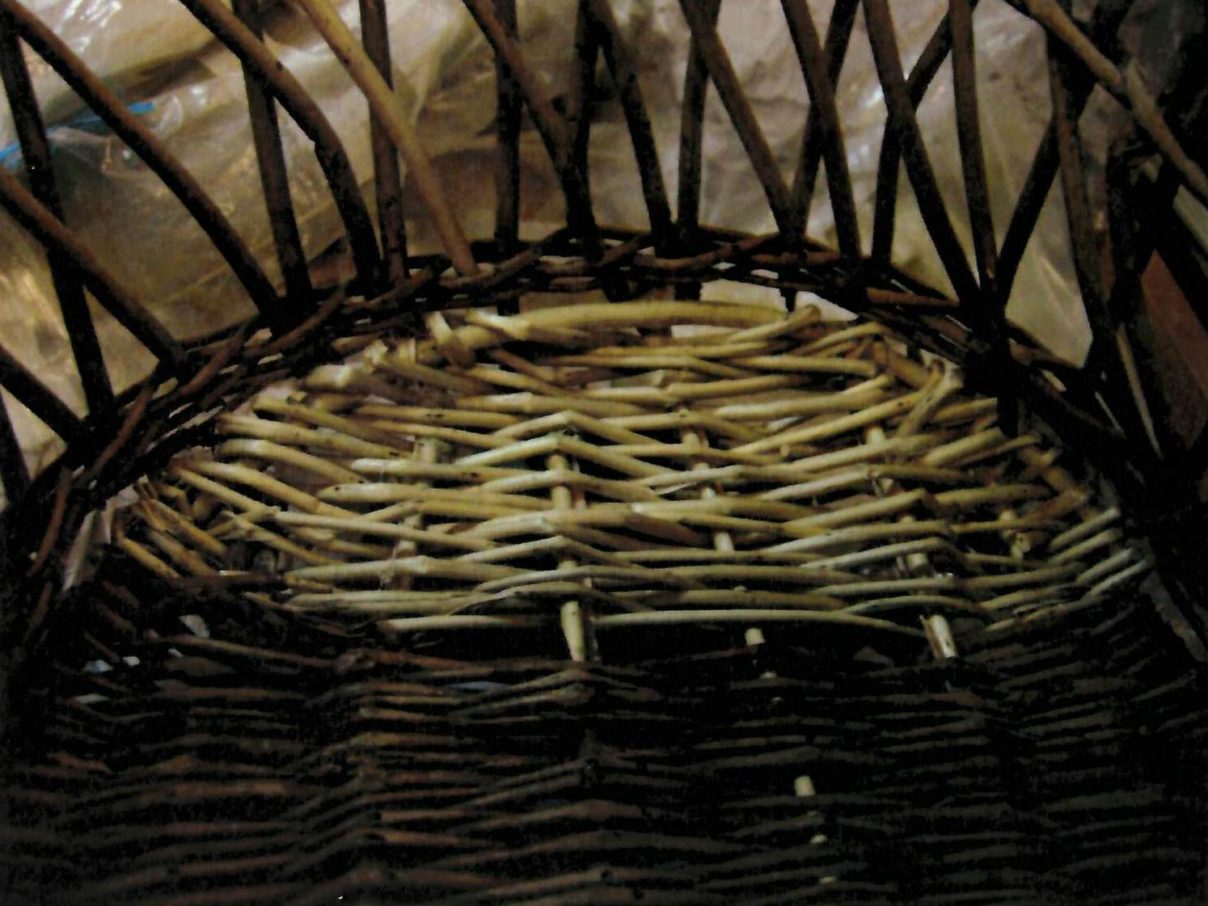
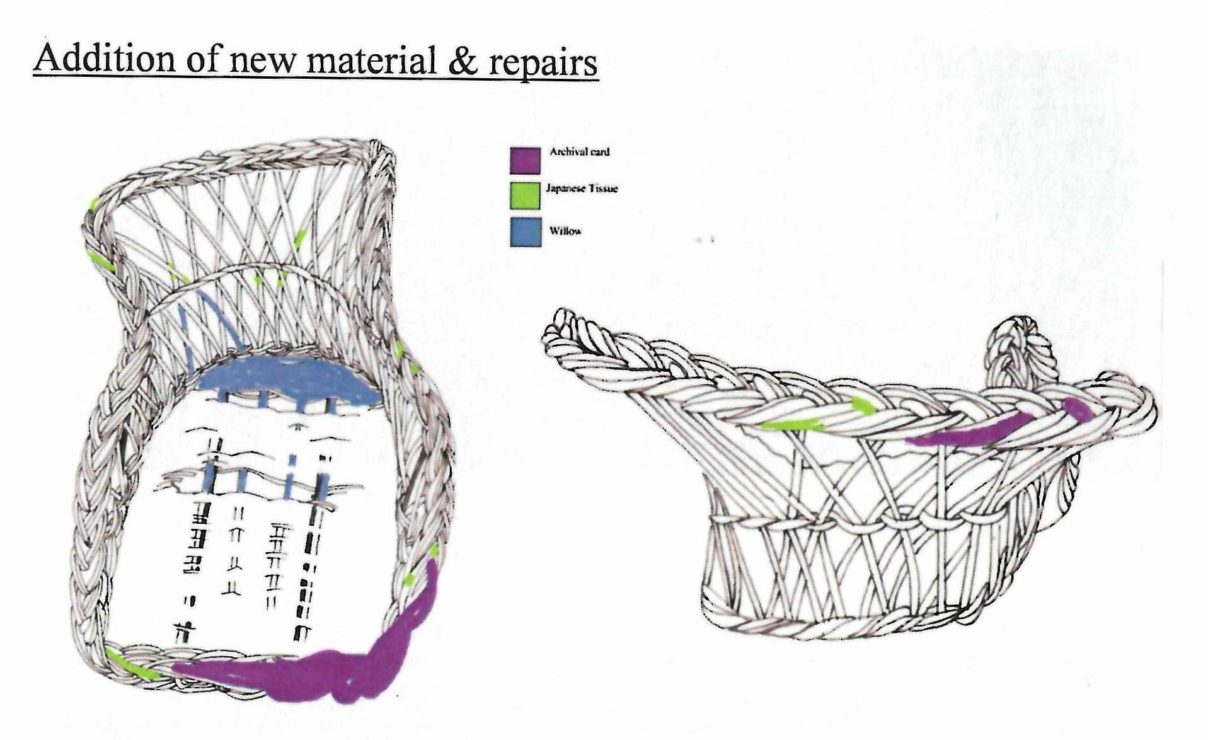
As there were a number of areas with surface material loss, these would require the addition of new material to strengthen and allow the basket to look complete. A combination of willow, archival card, and Japanese tissue were used. These new areas were colour matched using acrylic paints to minimise the obtrusiveness of the repairs.
Scales and Dial Plate
To remove the loose dust and dirt the scales were first brushed and vacuumed. Following this initial cleaning the iron components were treated with tannic acid in order to stabilise the surface and help prevent future corrosion. These metal components were then consolidated using Paraloid B44 in Toluene as it had increased penetration and would not affect the paint on the object.
Originally the areas of missing paint on the object were going to be in-painted using acrylics, however the original paint was dissolvable in acetone so this was no longer an option. After careful testing a solution of Paraloid B67 in white spirit mixed with pigment produced a suitable paint that could be applied to the surface and would not affect any of the original material.
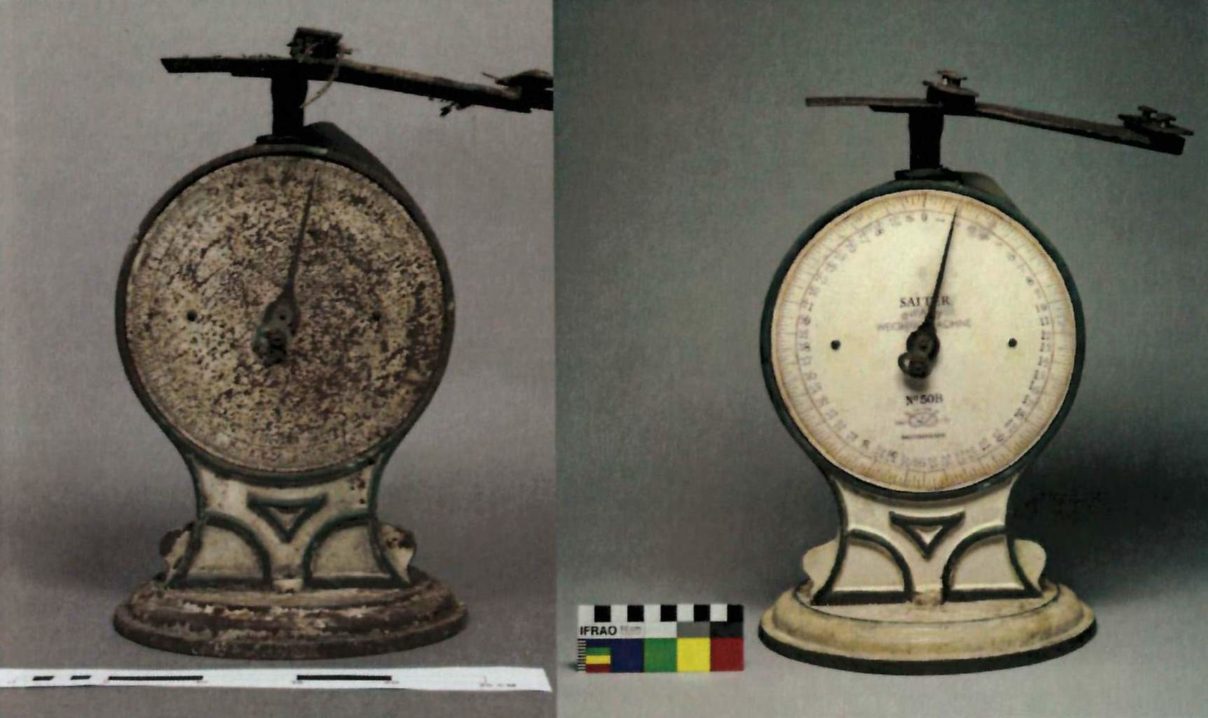
Unfortunately the dial plate had suffered a large amount of surface material loss and no longer showed the objects function as it would have when in use. As such, it was decided that this would require some form of restoration. Two options were considered for this; in-painting, and an archival card cover. It was decided that placing an archival card dial plate over the original would be the most appropriate option as it would ensure the original was still accessible and would be easier to remove than in-painting. Using an image of an original dial plate a replica was created with the help of a graphic artist and was printed using long lasting pigments to prevent fading.